Turtle Sanctuary - Junquillal
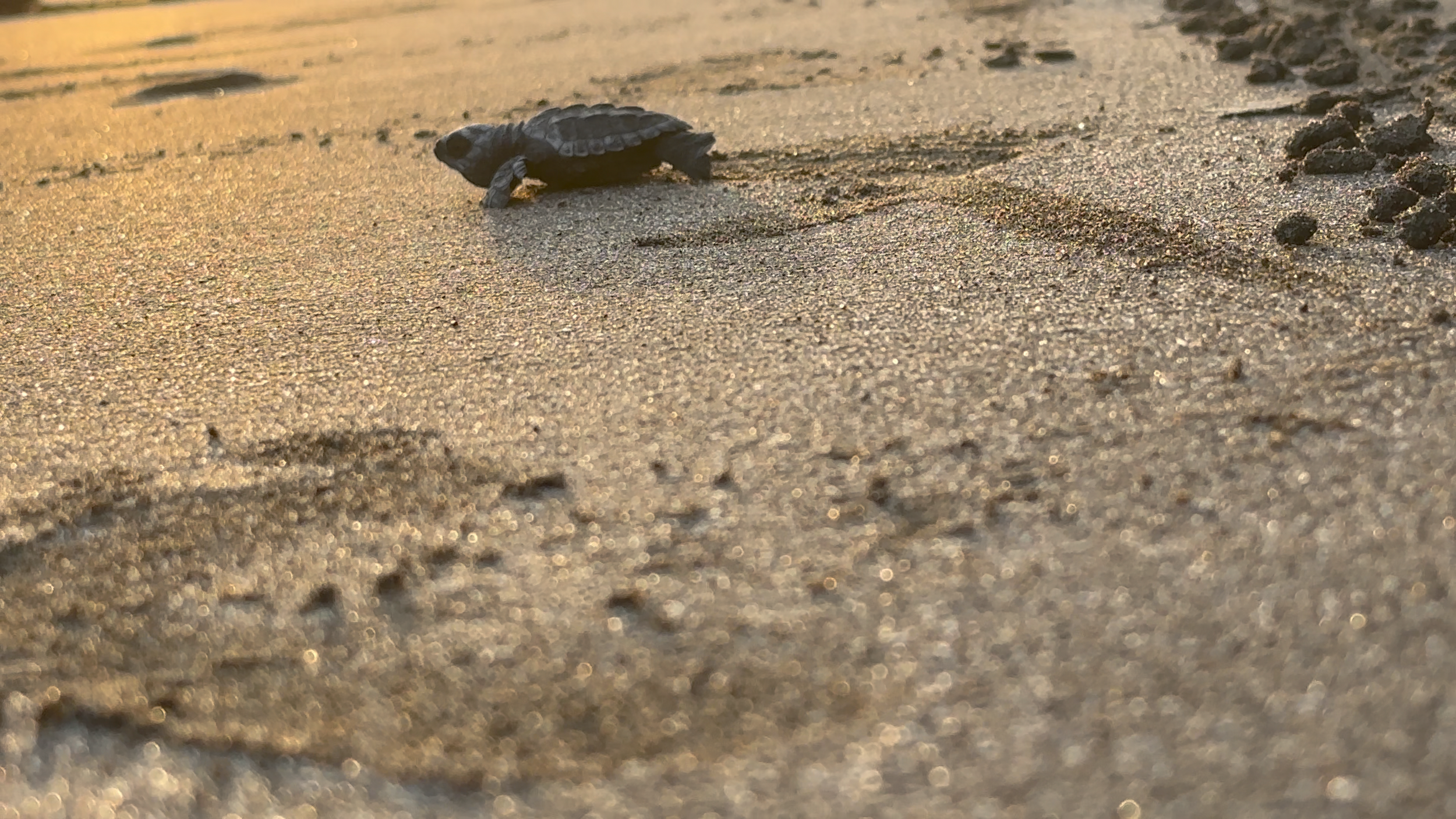
All 4 marine turtles nest here, on both the Pacific and Caribbean coasts.
Olive Ridley Sea Turtle (Lepidochelys olivacea)
Status:Endangered / Vulnerable
Olive ridley sea turtles, sometimes called Pacific ridley sea turtles, are on the small size at around 2 feet long and 55-110 lbs. They are the most abundant sea turtle in the world – and even so, they're still an endangered or vulnerable species, depending on the measurement. Olive ridleys are unique in that they often nest in arribadas: mass nesting events, during which thousands of turtles nest over several nights. Arribadas usually occur around the new moon.
In Costa Rica, olive ridleys are most common on the Pacific coast. In Junquillal we’ve mostly released Olive Ridleys.
Arribadas are common at Playa Ostional and Playa Nancinte, with annual nesting calculated at 600,000 to 750,000 turtles.
Hawksbill Sea Turtle (Eretmochelys imbricata)
Status:Critically Endangered
Known for its unique hooked bill, similar to a hawk's, hawksbill sea turtles are medium-sized at 3 feet longand 100-150 lbs. They are the most tropical of all sea turtles, sticking closely to the warm waters of the Atlantic, Pacific, and Indian Oceans. They only nest at intervals of two+ years, but during their nesting season they'll nest two to four times.
In Costa Rica, hawksbill sea turtles are most common in the Caribbean turtle hotspot of Tortuguero.
Leatherback Sea Turtle (Dermochelys coriacea)
Status:Vulnerable
The massive leatherback sea turtle – also, lute turtle, leathery turtle, or simply the luth – is the world's largest living turtle, at 8 feet and up to 1,500 lbs. It's also the fourth-largest of all reptiles, second only to three crocodilians.
In addition to its size, the leatherback's most distinctive feature is its lack of traditional turtle shell; instead, its body is covered with a leather-like confection of oily skin and flesh. In Costa Rica, leatherbacks nest on both Caribbean and Pacific beaches.
Black Sea Turtle (Chelonia mydas)
Status: Endangered
Black sea turtles – currently considered a sub-species of Green Sea Turtles, and Pacific green turtles – grow up to 4 feet and ~350 pounds, and live approximately 80 years in the wild. They are found in both the Pacific and the Atlantic/Caribbean, as well as in the Indian Ocean, and are known to migrate long distances between their primary feeding grounds and nesting beaches. Interestingly, when it comes time to nest, most green sea turtles return to very beach on which they were hatched.
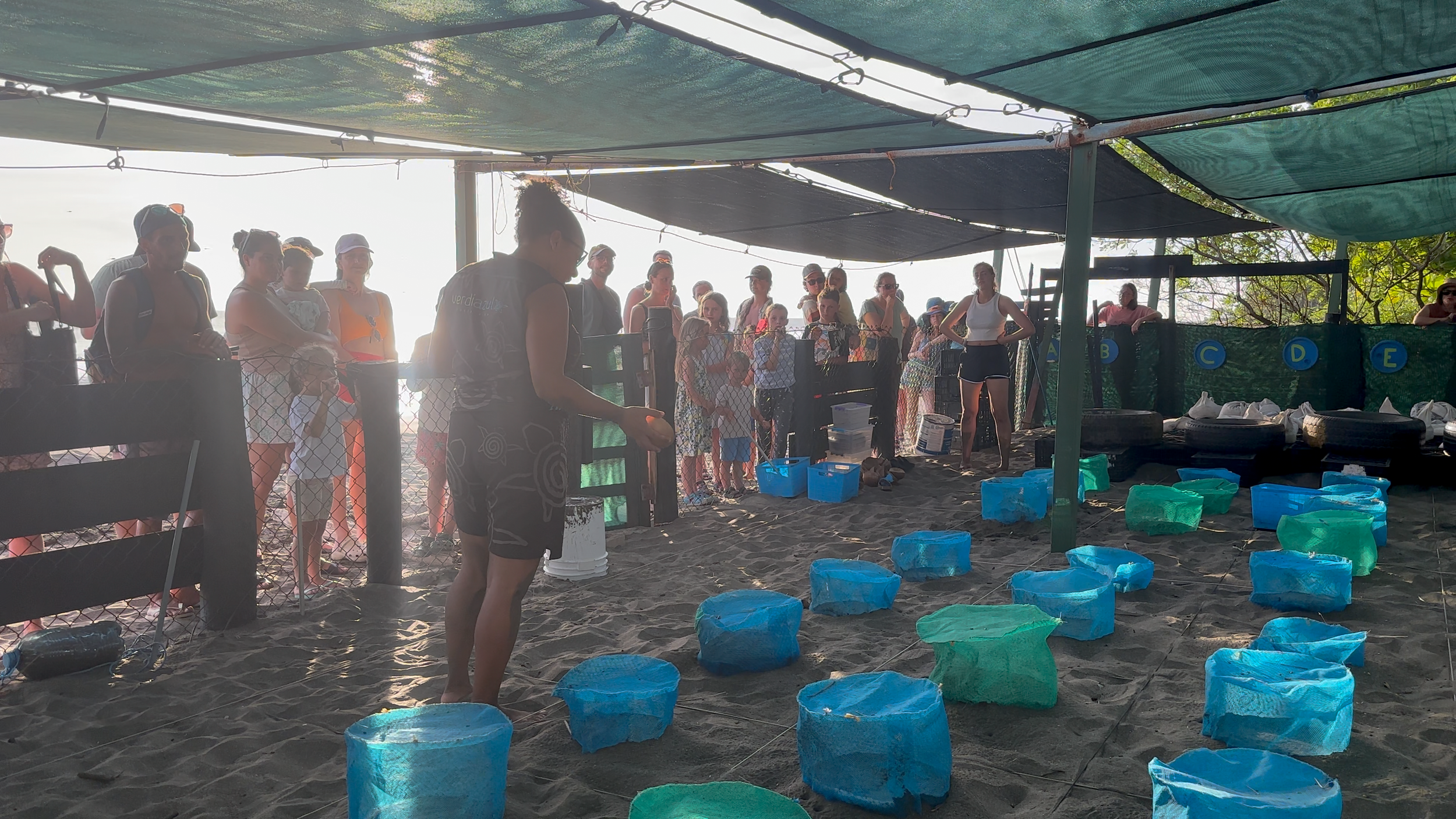
Turtle Talk - Verdiazul
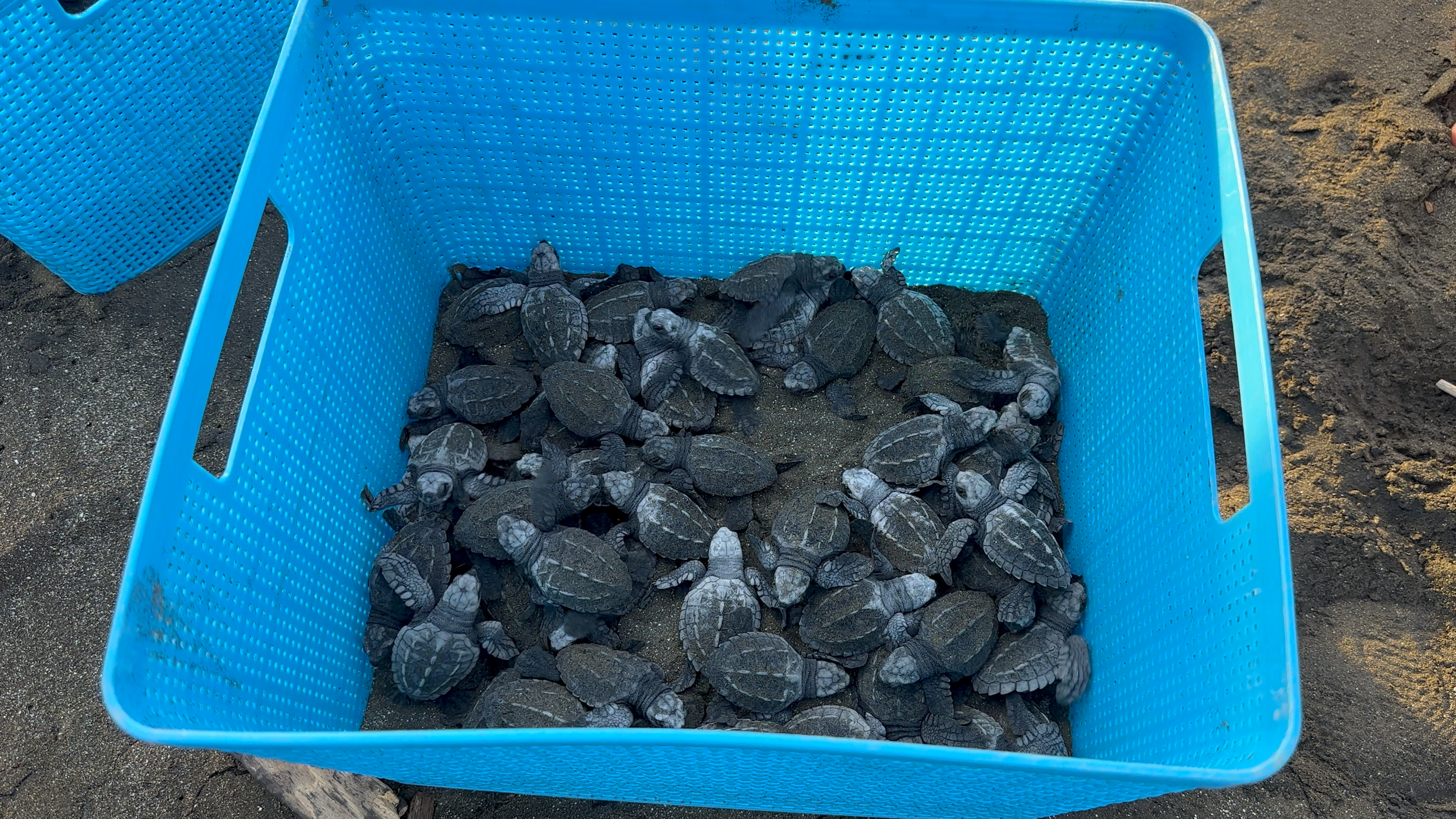
Just before sunset, when baby turtles have hatched. Biologists from our local conservation group, Fundacion Verdiazul, present information about their ecological efforts. You can donate a few dollars ($10 as of this writing) and help release hatchlings into the ocean to ensure future generations of turtles in our oceans.
Contact +506 8865-0665
If you send them a message on Whatsapp they will add you to their list and message you when they are releasing turtles.